Engineering
services for
real problems.
Contact us →
We cover the complete path, from a broken part or untested idea through to a working component, and onward to production when volumes demand it. One team. One point of contact.
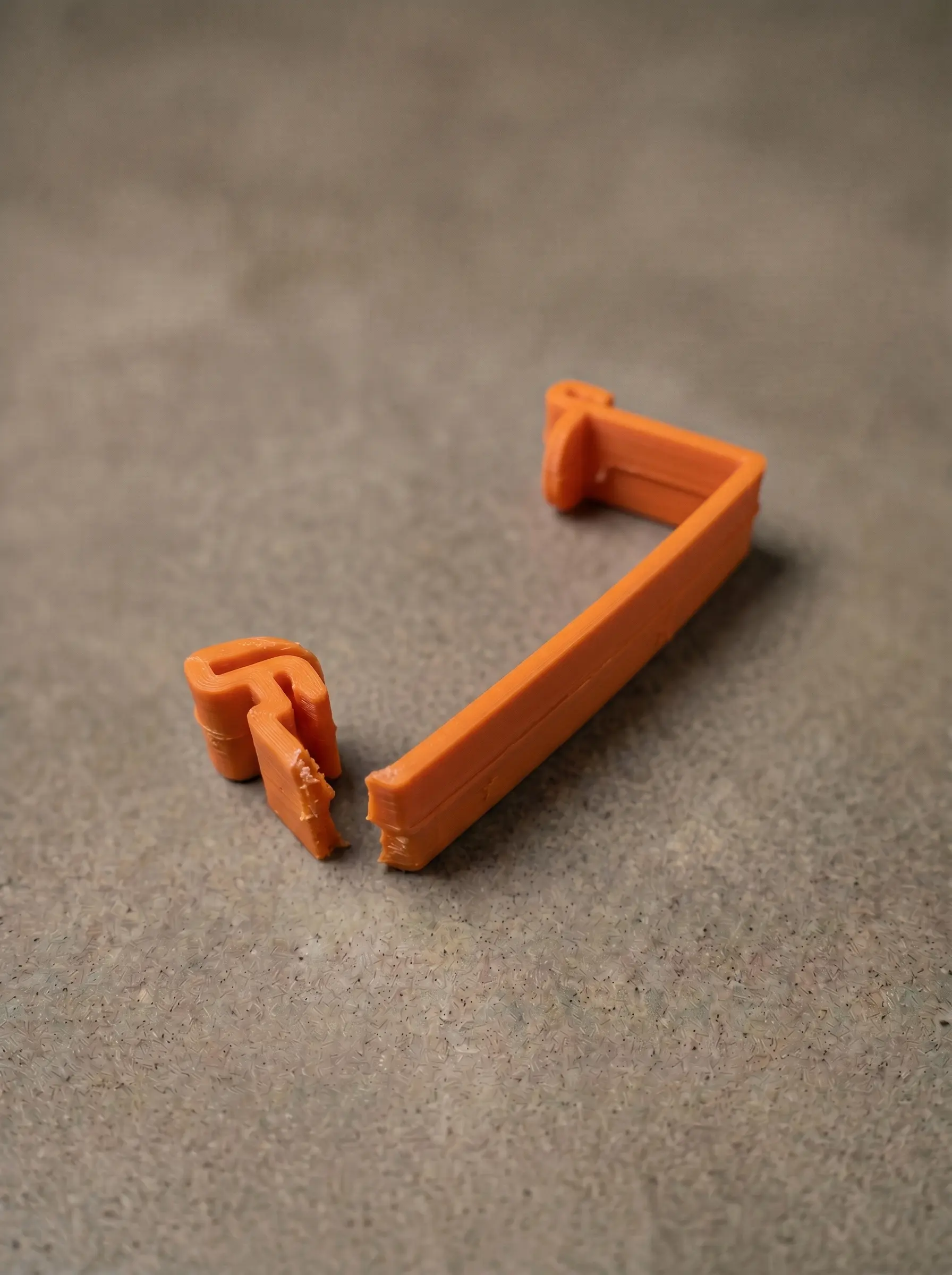 Broken original
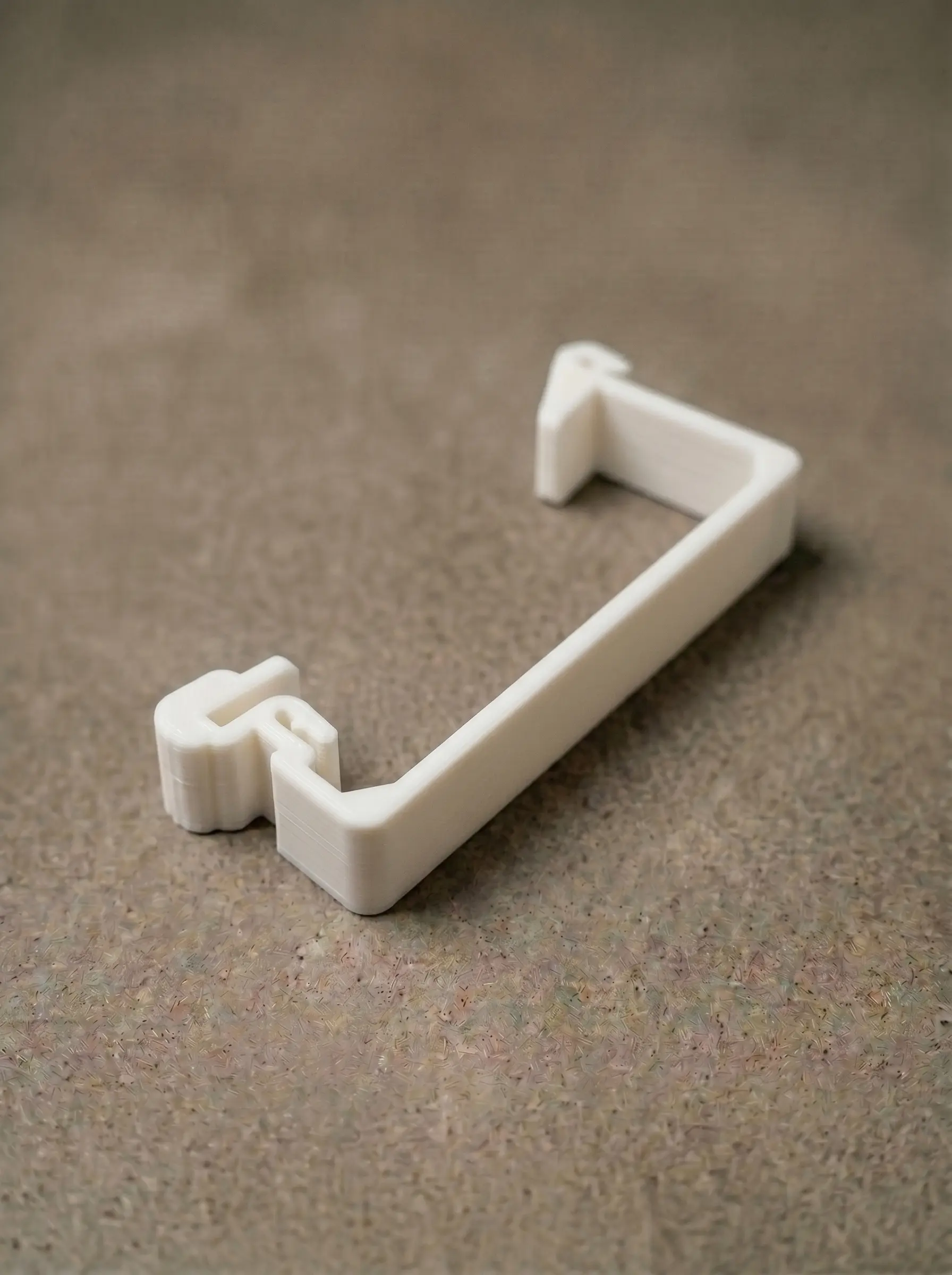 Remade in PETG
| Material | Key Properties | Typical Applications | Max service temp | Avoid when |
|---|---|---|---|---|
| PETG | Chemical resistance, toughness, low shrink | Enclosures, brackets, production parts, fluid contact components | ≈70 °C HDT; softens under sustained load above ~60 °C | Sustained load near/above 60 °C; UV-critical outdoor parts |
| ASA | UV stability, weather resistance, stiffness | Outdoor components, industrial housings, parts exposed to sunlight | ≈95 °C; ~90 °C continuous | High structural load at elevated temp; food contact |
| ABS | Impact resistance, machinability, post-processable | Functional prototypes, housings, parts requiring sanding or bonding | ≈95-100 °C HDT | Outdoor/UV exposure (yellows, embrittles); watertight parts |
| Nylon PA12 | Flexibility, wear resistance, fatigue tolerance | Clips, snap-fits, hinges, gears, parts under repeated flex | ≈95-110 °C; higher when dry | Tight tolerances in humid environments unless dried & sealed (hygroscopic) |
| PA-CF | High stiffness, low weight, dimensional stability | Structural parts, jigs, tooling, high-load components | ≈120 °C+ HDT; very stiff | Impact/shock or ductile applications (brittle, notch-sensitive) |
- One-off replacement parts
- Short-run custom components (1-50 pieces)
- Functional prototypes requiring mechanical testing
- Jigs, fixtures, and production aids
- Parts needed faster than machining allows
- Oversized parts split into printable sections and assembled
- Geometry not achievable with other processes
Metal 3D printing is available through our partner network for applications requiring steel, aluminium, or titanium, heat-critical, load-bearing, or corrosion-exposed components where engineering plastics are not appropriate. Contact us to discuss requirements.
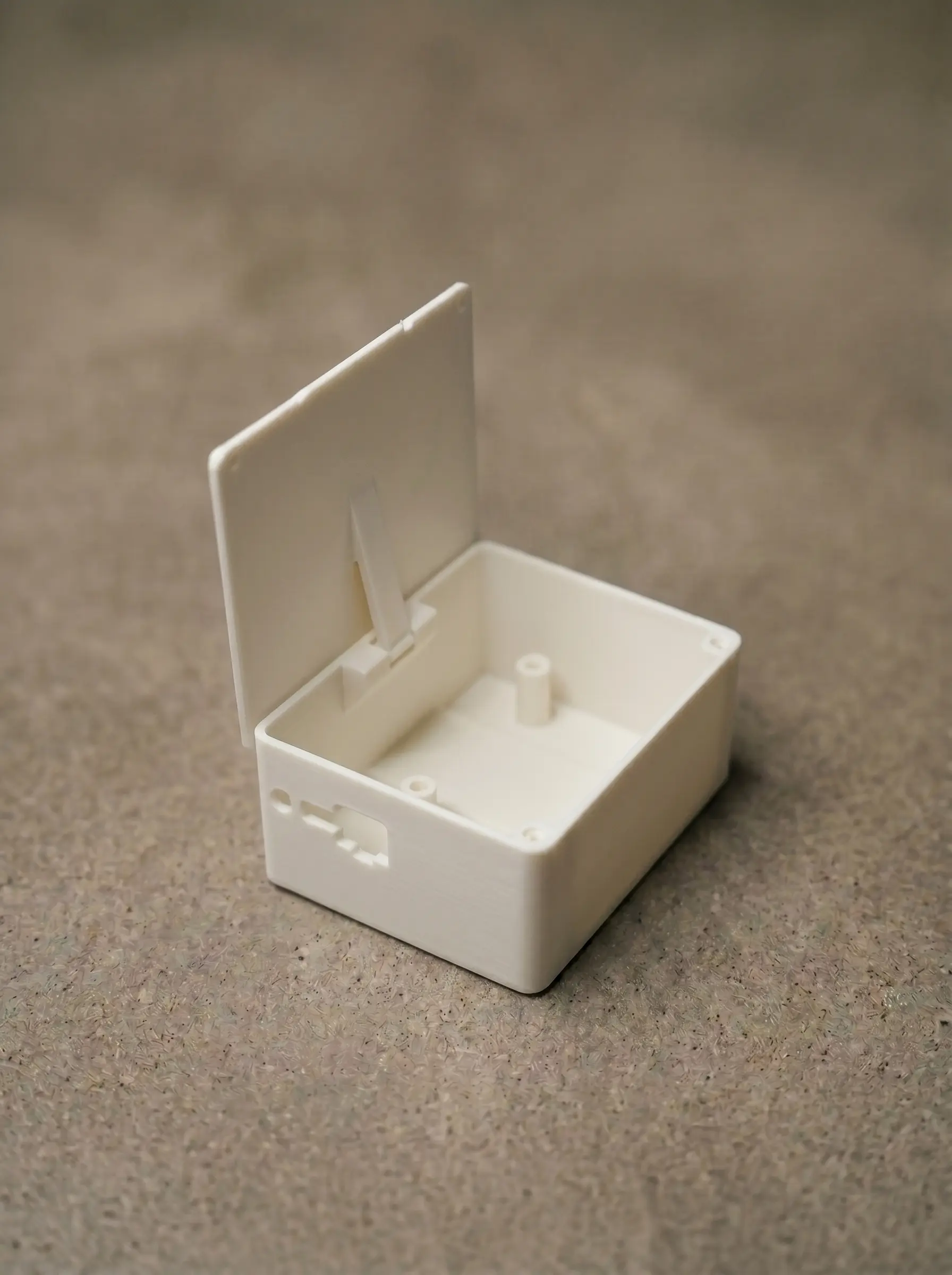
- Custom components with no existing drawings
- Parts designed for 3D printing, injection moulding, or machining
- New product development at concept stage
- Assemblies requiring multiple mating parts
- Machine components, enclosures, brackets, and fixtures
- Parts where you know the function but not the geometry
- Fully parametric 3D model
- STEP and STL export for any downstream process
- Material and process recommendation
- Revision rounds until geometry is approved
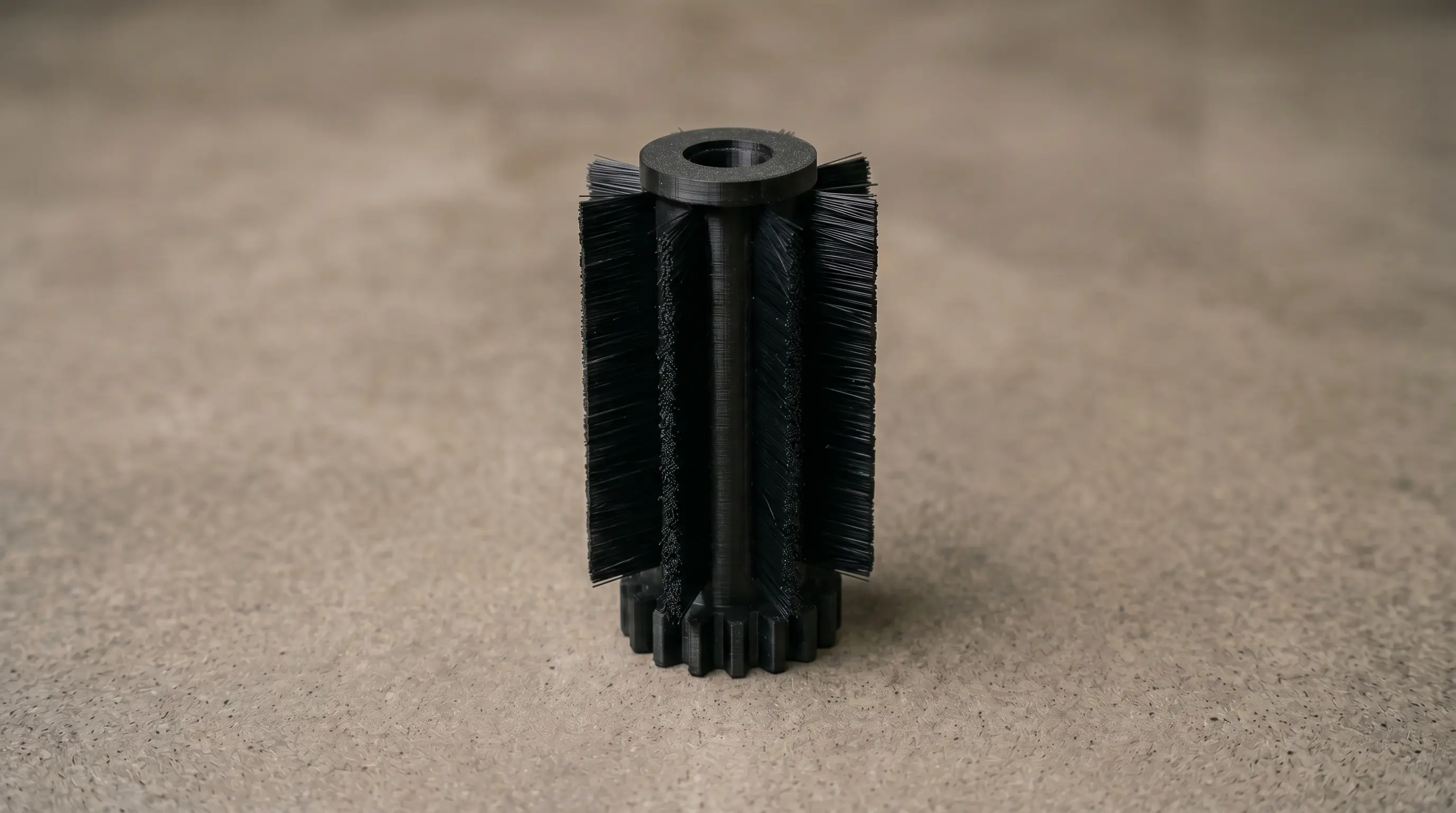
- Physical samples and worn parts
- Photographs and measurements
- Partial drawings or specifications
- Broken or incomplete components
- Worn or broken production line components
- Legacy machine parts with no available replacements
- Parts where the original supplier no longer exists
- Creating a documented CAD record of existing tooling
- Modifying an existing part where no drawing exists
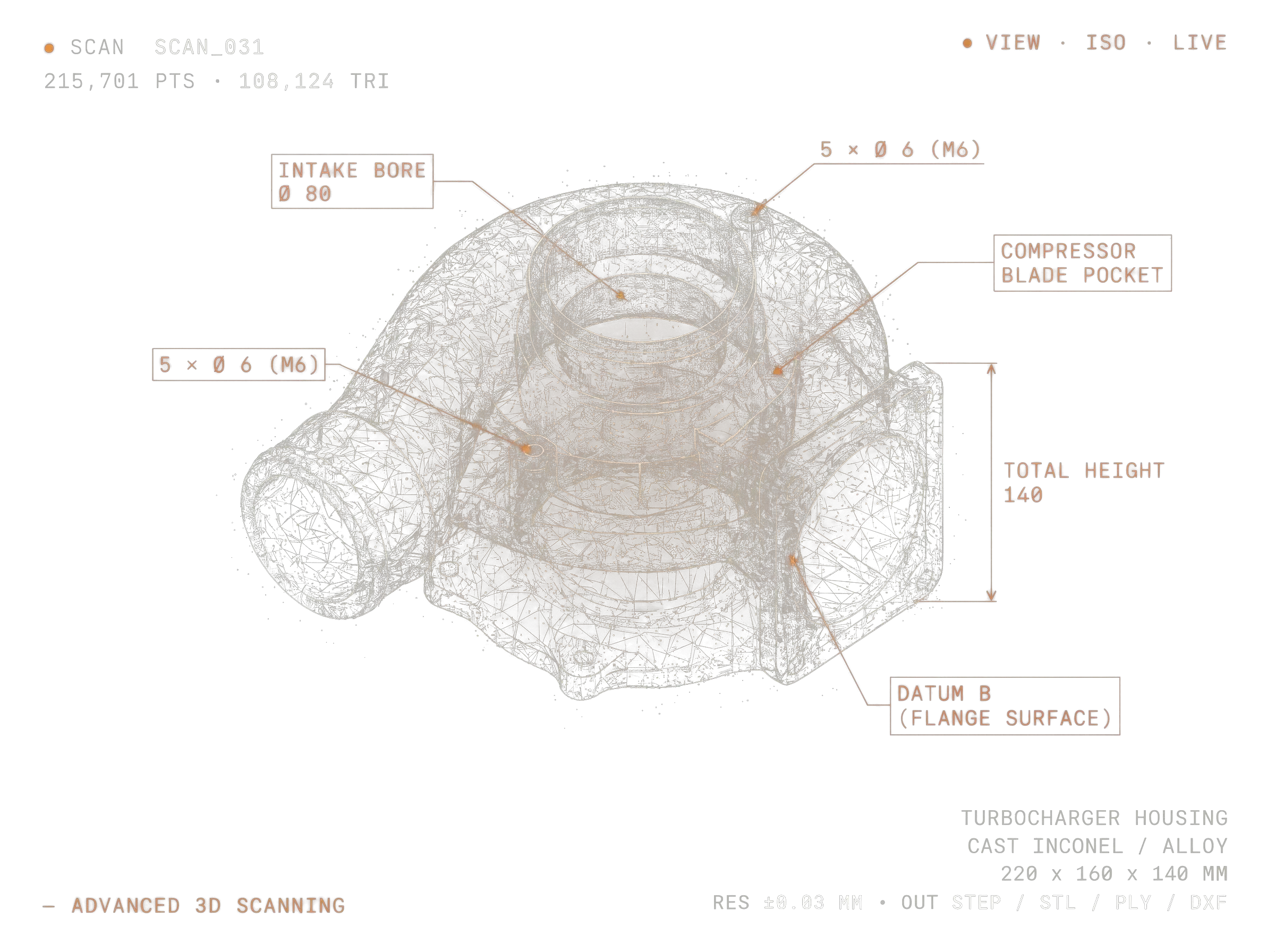
- Physical objects and assemblies
- Photographic documentation and video walkthroughs
- Organic and freeform geometry not suited to manual measurement
- Incomplete or damaged parts requiring reconstruction
- Reverse engineering parts with complex curved geometry
- Creating a 3D record of existing components or assemblies
- Rapid geometry capture when a part must return to service quickly
- Generating print-ready files directly from scan data
- Situations where manual measurement is impractical
Prototype
to Production.
We don't just produce prototypes and leave you to figure out the next step. For injection moulding we design the mould tool; the steel mould itself is made by a specialist tooling supplier, and your parts are moulded by our associated manufacturing company on their machines - we don't cut tooling steel in-house. We support the same transition from a working FDM print to higher-volume injection moulding and vacuum forming.
Same team. Same CAD files. No re-briefing. The design intent stays with your engineer throughout.
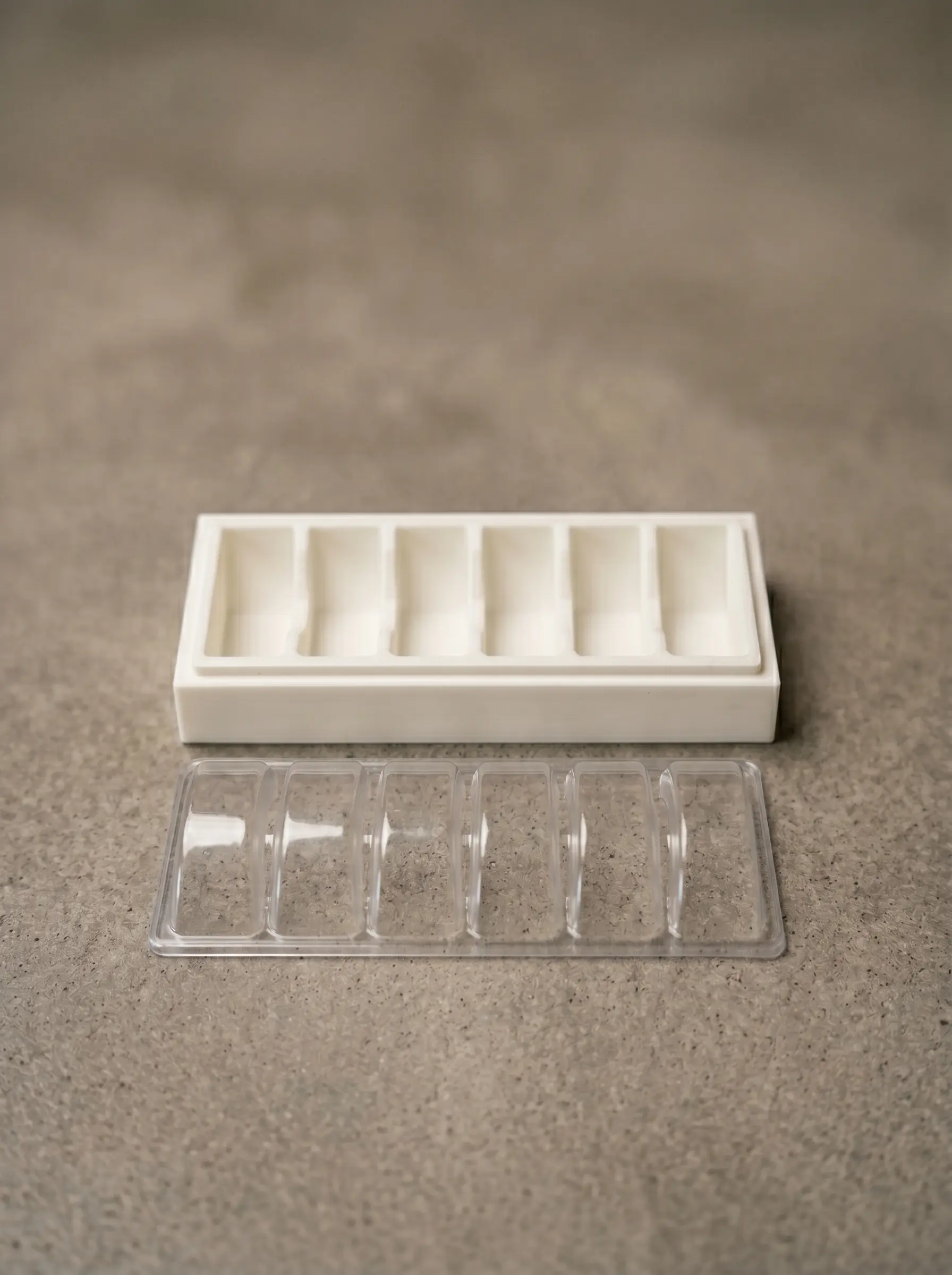
- CAD model the desired part geometry
- Design and make the cast-polyurethane forming tooling in-house
- Validate form, fit, and production intent on the vacuum former
- Iterate tooling geometry before committing to machined tooling
- Transition to aluminium tooling when production volumes require it
- Early-stage product validation before tooling investment
- Short-run formed components and packaging trays
- Covers, lids, and shallow formed profiles
- Situations where aluminium tooling lead time is a constraint

- Logos and branding on housings and enclosures
- Control panels, scales, and functional markings
- Serial numbers and asset marking
- Personalised and promotional items
- Branding parts we design or print for you - one supplier for part and print

- Cylindrical products: caps, closures, bottles, pens
- Irregular housings and asymmetric parts
- Product families needing fast changeover
- Replacing worn or missing holders on legacy machines
- Duplicate fixture sets for multi-station printing
Choosing a process? Start here.
Plain-language engineering explainers to help you decide how to make a part - process, material, sizing, spares, and when low-volume tooling makes sense.
Describe the
problem. We'll
advise the process.
Send us a photo, a sketch, or a written description. We'll tell you which approach makes sense, and what it will cost.